
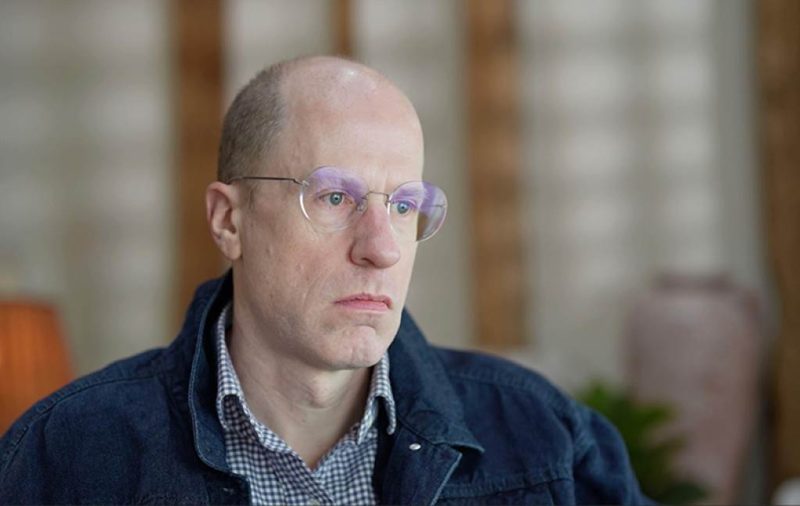
What if everything you see, touch, and feel is nothing more than lines of code running inside an unimaginably powerful computer? The question are we living in a simulation has moved far beyond sci-fi movies and late-night dorm debates. According to a 2023 YouGov poll, roughly 1 in 5 Americans believe reality could be artificially constructed. Meanwhile, top physicists and philosophers at institutions like MIT and Oxford are dedicating serious research hours to this very idea. This article breaks down the science, the philosophy, and the latest thinking so you can form your own educated view.
Why Smart People Take the Simulation Theory Seriously
For decades, the simulation hypothesis was dismissed as fringe thinking. That changed dramatically when Oxford philosopher Nick Bostrom published his landmark paper in 2003. He argued that at least one of three things must be true: civilizations go extinct before reaching technological maturity, advanced civilizations lose interest in running simulations, or we are almost certainly living in a simulation right now. This logical framework, known as the “Simulation Trilemma,” turned the idea into a legitimate philosophical puzzle. Since then, the question “are we living in a simulation” has attracted serious attention from scientists, technologists, and even billionaires like Elon Musk.
The Role of Computing Power in the Debate
Modern computers already simulate entire ecosystems, weather patterns, and even basic neural networks. Researchers at Google DeepMind and OpenAI have built models that simulate realistic environments with stunning accuracy. If computing power continues to grow exponentially, a future civilization could theoretically simulate billions of conscious minds. This possibility is not science fiction; it follows directly from current technological trends. The sheer mathematical plausibility is exactly what makes simulation theory so hard to dismiss.
What Physics Actually Tells Us About Our Reality
Here is where things get genuinely fascinating. Several features of our physical universe line up suspiciously well with what you would expect from a simulated system.
The Universe Runs on Math
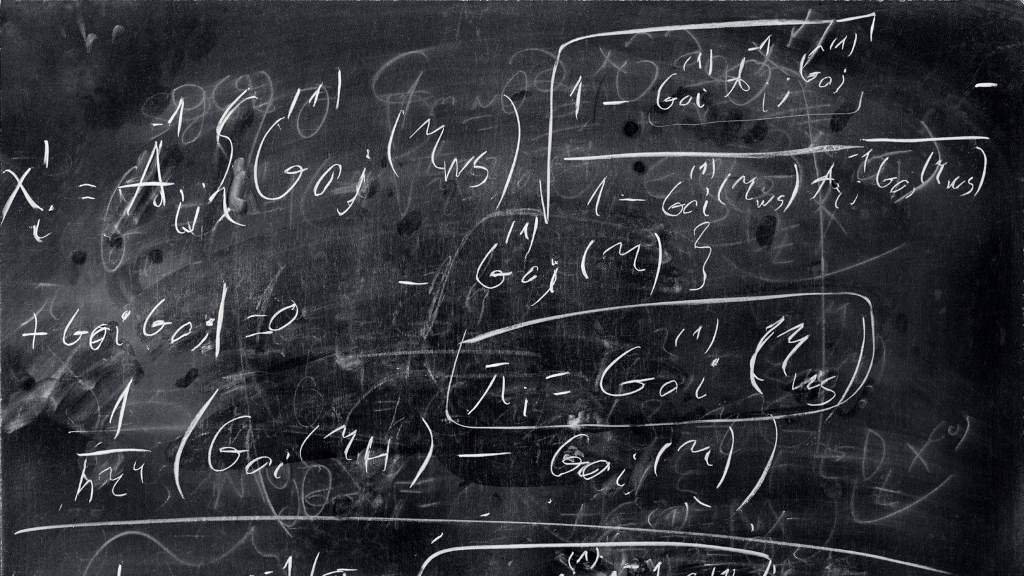
Physicist Max Tegmark at MIT argues that the universe is not merely described by mathematics; it actually is mathematics. Every particle, force, and interaction follows precise, elegant equations. This level of mathematical precision feels less like nature and more like intentional programming. Furthermore, quantum mechanics introduces the idea that particles only “decide” their state when observed, which some theorists compare to a video game only rendering what the player is currently looking at. These clues do not prove anything, but they do make you think.
The Planck Length: Reality’s Pixel Size?
The Planck length (about 1.616 x 10^-35 meters) is the smallest meaningful unit of space in physics. Below this scale, the laws of physics simply break down. Some researchers suggest this could represent the resolution limit of a simulated universe, much like pixels on a screen. Additionally, the speed of light acts as a universal speed cap, which mirrors how simulated environments enforce computational boundaries. These parallels between physics and computing are striking, even if they remain speculative.
Information as the Fabric of Reality
Physicist John Archibald Wheeler famously coined the phrase “It from Bit,” meaning physical reality emerges from information. Modern quantum physicists increasingly treat information as more fundamental than matter or energy. If the universe is ultimately built from information, then asking whether we live in a simulation becomes almost a question of semantics. After all, a simulation is, at its core, information being processed. This view does not prove the simulation hypothesis, but it removes one of the strongest objections to it.
The Philosophical Angle: What Would It Even Mean?
Philosophy has wrestled with the nature of reality long before computers existed. Descartes famously asked whether a deceiving demon could be making him believe in a false reality. Today, philosophers ask something remarkably similar about digital architects. If our experiences, emotions, and relationships are real to us, does it ultimately matter whether they run on carbon or silicon? Many thinkers argue the answer is no. The simulation hypothesis, in this light, becomes less about fear and more about curiosity regarding the deeper nature of existence.
Consciousness and the Hard Problem
Even if we proved tomorrow that we live in a simulation, one massive question would remain: where does consciousness come from? This is what philosophers call the “Hard Problem of Consciousness.” No current model, simulated or otherwise, fully explains why we have subjective inner experiences. Some researchers, like David Chalmers, suggest that consciousness might be a fundamental feature of the universe, meaning a simulated universe could still produce genuinely conscious beings. Therefore, living in a simulation would not make your experiences any less meaningful or real.
How Scientists Are Actually Testing the Hypothesis
Here is the part that surprises most people: scientists are genuinely designing experiments to test whether we live in a simulation.
Cosmic Ray Anomalies and Grid Patterns
Researchers at the University of Washington, including Silas Beane, proposed in 2012 that a simulated universe might show up in the energy distribution of cosmic rays. If space-time has an underlying grid structure (like a computer lattice), particles hitting that grid at extreme energies might behave in predictable, detectable ways. While no conclusive evidence has been found yet, the experiment is scientifically valid and testable. This is exactly the kind of empirical approach that takes the simulation question out of pure philosophy and into science.
Quantum Computing as a Mirror
Interestingly, the rise of quantum computing has added a new dimension to the debate. Quantum computers use the principles of superposition and entanglement, which are the same strange rules that govern our universe at the smallest scales. Some physicists argue this is not a coincidence. If our universe is itself a quantum computation, studying quantum computers could give us indirect clues about the nature of our own reality. Research in this area is ongoing at institutions like Caltech and the University of Chicago.
Arguments Against the Simulation Hypothesis
Fairness demands we look at the strongest counterarguments as well.
- The energy problem: Running a simulation of an entire universe would require unimaginable amounts of energy, possibly more than any civilization could generate.
- The consciousness problem: No one has demonstrated that consciousness can be meaningfully replicated in a digital system.
- Occam’s Razor: The simplest explanation for reality is usually that it is simply real, not constructed.
- Infinite regress: If we live in a simulation, who simulates the simulators? This creates a logical loop with no clean resolution.
- Lack of evidence: Despite creative attempts, no experiment has produced direct evidence for a simulated substrate.
These objections are serious and should not be brushed aside. The simulation hypothesis remains a hypothesis, not a scientific theory with confirmed predictions.
What Leading Thinkers Believe Right Now
The intellectual landscape on this question is wonderfully diverse. Neil deGrasse Tyson has stated he thinks the odds of us living in a simulation are “very high.” On the other hand, physicist Sabine Hossenfelder argues that the hypothesis is not even falsifiable and therefore not scientific. Philosopher David Chalmers devoted an entire book, “Reality+,” published in 2022, to arguing that virtual realities are genuine realities. Meanwhile, Elon Musk has publicly stated he believes the probability we are NOT in a simulation is “one in billions.” The debate is very much alive, active, and unresolved at the highest levels of intellectual inquiry.
How the Simulation Question Changes the Way You Think
Engaging seriously with the question “are we living in a simulation” has a surprising side effect: it sharpens how you think about reality, consciousness, and what truly matters. It pushes you to examine assumptions you never knew you had. It also fosters a kind of intellectual humility, reminding us that our understanding of the universe is still incomplete. Many people who explore this topic find they become more curious, more open-minded, and more comfortable with uncertainty. In that sense, the question itself is valuable regardless of whether it ever gets answered.
Conclusion
So, are we living in a simulation? The honest answer is: we genuinely do not know. What we do know is that the question is scientifically plausible, philosophically rich, and culturally significant in a way it has never been before. The rapid growth of AI and quantum computing means this debate will only intensify in the coming years. We encourage you to keep exploring, stay curious, and follow the work of researchers at the frontier of physics, philosophy, and computer science. Share this article with someone who loves big ideas and start your own conversation about the nature of reality.
Frequently Asked Questions
What is the simulation hypothesis in simple terms?
The simulation hypothesis is the idea that our entire reality, including the universe and everything in it, is actually a sophisticated computer program run by a more advanced intelligence.
Who first proposed the idea that we might live in a simulation?
Philosopher Nick Bostrom at Oxford University formally introduced the modern version of the simulation argument in his 2003 paper “Are You Living in a Computer Simulation?”
Is there any scientific evidence that we live in a simulation?
No definitive evidence exists yet, though researchers have proposed testable experiments involving cosmic ray patterns and quantum lattice structures that could provide indirect clues.
Does living in a simulation mean our experiences are not real?
Not necessarily; most philosophers argue that if our experiences, emotions, and consciousness feel real to us, they are real in every meaningful sense regardless of the underlying substrate.
What is the strongest argument against the simulation theory?
The strongest argument is the “energy and resource” problem: simulating an entire universe at the quantum level would require computational resources so vast that no known or imaginable civilization could provide them.

Leave a Reply