
You do not need to tear up the lawn to fix patchy grass in shade. Most thin, bare spots under trees come from too little light, compacted soil, or the wrong grass species, and each cause has a targeted fix. A focused repair of the shaded zones usually restores a full look at a fraction of the cost and effort of a full renovation. The work starts with a diagnosis rather than a shovel.
If you want a structured walkthrough of the broader repair methods, the team at //boyerslawncare.com/ covers the groundwork in detail. This guide narrows in on the shaded spots specifically. You can keep your healthy lawn intact and treat only the areas that struggle.
Quick answer: Diagnose why the shade is thinning the grass, then fix that cause: raise light levels by pruning, loosen compacted soil, overseed with a shade-tolerant grass, and water less often but deeper. Work on the affected zones only, and expect gradual improvement over a few growing seasons rather than overnight results.
What is fix patchy grass in shade?
Fixing patchy grass in shade means repairing thin or bare zones under trees, along fences, and beside buildings by correcting the conditions that starve turf of light and nutrients. It is a spot-treatment approach, not a renovation. You keep the healthy lawn and target only the struggling areas. Bare patches under trees rarely need to be completely replanted.
Shade changes how grass grows. With less direct sunlight, photosynthesis slows, so the plant builds less energy for root growth and recovery. The blades thin out, the color fades, and the turf loses its ability to outcompete weeds and moss. That decline looks like a patchy lawn, but the patchiness is a symptom. The cause may be low light, poor airflow, compacted soil, shallow watering, or a species that simply needs more sun.
A genuine diagnosis connects the spot to its cause. A thin strip along a north-facing fence likely suffers from low light. A compacted patch under a favorite path suffers from traffic and hard soil. A damp, mossy zone near a downspout suffers from excess moisture and poor drainage. Each cause needs a different response. Matching the treatment to the actual problem is the core of a successful repair.
Understanding this distinction prevents wasted effort. Homeowners often overseed a shaded area, watch nothing grow, then overseed again. Without addressing light or soil, the seed cannot establish no matter how much is applied. Diagnosis comes first, and the right treatment follows from it.
Most cool-season grasses need four to six hours of direct sun. A spot that looks "a little shady" may be sitting well below that threshold.
Takeaway: treat shade damage as a cause-and-effect problem, and identify the cause before buying seed or tools.
Why fix patchy grass in shade matters
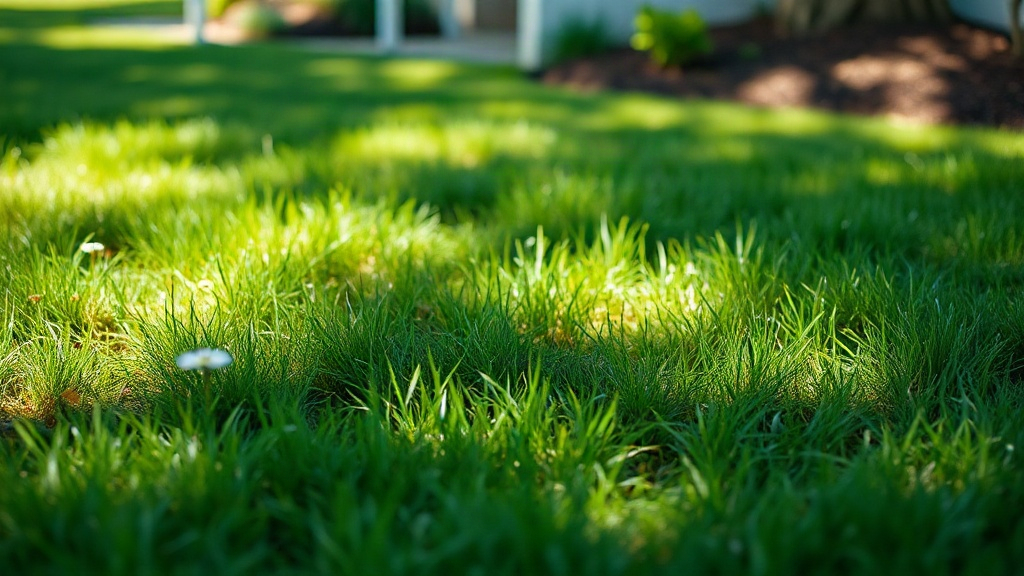
Patchy grass under shade spreads when ignored. Bare soil invites weeds that tolerate low light, such as moss, ground ivy, and certain broadleaf types. These plants fill the gap because they thrive where turf fails. Once established, they are harder to remove than the original bare spot would have been to repair. Early treatment keeps the problem contained.
Thin turf also exposes soil to erosion and compaction. Without a dense root mat, rain hits bare ground directly and washes topsoil away. Foot traffic then compresses the exposed soil, which worsens drainage and root growth. Left alone, the shaded patch becomes increasingly inhospitable to grass. Repairing the lawn early resets these conditions before they compound.
A healthier shaded lawn also supports the trees it grows under. Dense turf moderates soil temperature and retains moisture, which helps tree roots. The reverse is not true: grass competes with trees for water and nutrients, so a well-chosen shade grass and proper care keep the balance manageable.
Cost is a practical reason to act sooner. Replanting an entire yard means removing old turf, grading, bringing in soil, buying large quantities of seed or sod, and watering intensively for weeks. A targeted repair of a few shaded zones costs far less and demands less water. For most homeowners, that trade-off is decisive.
The same logic applies to curb appeal and resale. A lawn that is uniformly green looks maintained, while bare shaded patches read as neglect. Because shaded spots tend to be visible ones — the strip along the house, the area under a front-yard tree — repairing them yields a noticeable visual improvement.
Takeaway: fixing shaded patches early prevents weed takeover, soil decline, and the much larger expense of a full replant.
Best practices
Measure the light before choosing a grass
Track the hours of direct sun each shaded zone receives during the growing season. Watch it at mid-morning, midday, and mid-afternoon, and note how the shadow of buildings and trees shifts. Five hours of direct sun supports more grass options than two. The light measurement determines whether you can grow a moderately shade-tolerant turf or must limit grass to the sunniest edge and use groundcover elsewhere. Getting this number right saves you from planting a grass that cannot survive.
Prune to raise light levels
Canopy pruning is often the cheapest way to repair a shady lawn. Thin lower branches and raise the crown of mature trees so more morning and afternoon light reaches the ground. Doing this selectively keeps the trees healthy while increasing the sun hours that grass depends on. Have significant cuts done by a qualified arborist. Removing dead lower limbs and clearing dense understory shrubs along fences often makes an immediate difference.
Improve the soil before adding seed
Shade often comes with compacted, waterlogged soil. Aerate the affected zones with a core aerator so air and water penetrate, then top-dress with a thin layer of compost. This lightens heavy soil and improves drainage. For shaded spots that stay wet, check downspouts and grading so water moves away. Improve the soil first, because seed planted in poor soil fails regardless of light.
Choose a shade-tolerant grass for your region
Match the species to both your climate and your shade. Cool-season lawns generally do best with fine fescues, which tolerate low light and dry soil. Tall fescue also handles moderate shade well. Warm-season grasses are less tolerant of deep shade overall. In very dense shade, no turf will thrive, so limit grass to the brighter edges and use shade-loving groundcover for the darkest sections. A blend spreads risk better than a single variety.
Overseed with the right method and timing
Overseed only after light and soil are improved. Loosen the surface lightly, spread seed at the rate on the label, and keep the area consistently moist until germination. Sow during the season your grass establishes best — early fall for most cool-season grasses, late spring for warm-season types. Light mulch over seed helps retain moisture on sloped or exposed spots.
Rake the seed gently into the top quarter-inch of soil. Seed sitting on hard ground dries out before roots form.
Takeaway: measure the light, prune trees, fix the soil, choose a shade-tolerant grass, and overseed at the right time for steady recovery. For broader repair techniques, this guide to patchy grass repair covers seedbed preparation and aftercare.
Common mistakes to avoid
Overseeding without diagnosing the cause
The most frequent mistake is buying shade seed and spreading it on a spot that is actually compacted, waterlogged, or suffering from too little light. The seed fails, and the cause remains untouched. Diagnosis comes first: light, then soil, then seed. Skipping that order wastes money and delays real recovery.
Mowing too short in shaded areas
Grass in shade produces less energy than grass in full sun, so it needs more leaf area to photosynthesize. Cutting shaded turf to the same short height as sunny turf starves it. Set the mower one notch higher over shaded zones and cut less frequently where growth is slow. Longer blades shade the soil, conserve moisture, and support deeper roots.
Overwatering to compensate for thinness
Thin shade grass looks dry, so homeowners water it more — and that causes rot and disease. Shaded soil dries more slowly and stays wet. Water less often but more deeply, and let the surface dry between cycles. Improve drainage, and fix downspouts that dump water onto the spot. Excess moisture damages shaded grass faster than dryness does.
Applying too much fertilizer
Shaded grass grows slowly and cannot use heavy feeding. Excess nitrogen pushes weak, soft growth that is vulnerable to disease, and the runoff harms nearby plants. Use a light feeding appropriate for shade, and rely on soil improvements rather than fertilizer to build turf. Overfeeding is a common reason shaded patches look worse after treatment.
Choosing the wrong grass species
Planting a sun-loving or warm-season grass in deep shade guarantees failure. Read grass labels for shade ratings, and match to your region. If no turf species will grow in a given spot, accept that and use groundcover rather than repeatedly overseeding with the wrong grass.
Takeaway: the fixes are as much about stopping bad habits — shallow mowing, overwatering, overfeeding, and wrong species — as adding new steps. Avoiding these mistakes often matters as much as seeding itself.
FAQ
How long does it take to fix patchy grass in shade?
Expect gradual change. Improved light and soil show effects within one season, but newly overseeded shade grass usually needs two to three growing seasons to fill in fully. Seed germination takes weeks, and establishment is slow in low light. Judge progress by root density and blade coverage, not just green color.
Can I fix shaded patches without overseeding at all?
Sometimes. If the grass is thin but still present, raising light through pruning, aerating, and adjusting mowing and watering can thicken it. Overseeding speeds the process but is not always required. Where soil is bare, though, overseeding or a groundcover is usually necessary.
What is the best grass for shade in cool climates?
Fine fescues are generally the most shade-tolerant cool-season choice, followed by tall fescue. Blends that combine them spread risk across conditions. Warm-season grasses tolerate less shade overall. Always compare to your local climate and the specific light hours the spot receives.
Why does my shaded grass keep dying even after reseeding?
The underlying condition — insufficient light, compacted or wet soil, or the wrong species — is likely unchanged. Seed cannot overcome a cause you have not addressed. Recheck the sun hours, test drainage, and confirm the species is suited to that level of shade before reseeding again.
Conclusion
Fixing shady patches starts with diagnosis, not with a new lawn. Measure the light, correct compacted or wet soil, prune selectively to let more sun in, and plant a grass that tolerates your climate and shade level. Avoid shallow mowing, overwatering, overfeeding, and undiagnosed reseeding. Repeated spot treatments of only the struggling zones restore the lawn far more cheaply than a full replant. Start this week by timing the sun in your shadiest spot. Write down the number of hours, then match your repair plan to it — that single step tells you what your grass can realistically do.

Leave a Reply