
Starting a new hot tub for the first time means filling it properly, balancing water chemistry in the correct order, and letting the system run before your first soak. The full process usually takes two to four hours from empty to ready. Skipping steps risks cloudy water, equipment damage, or skin irritation. We suggest visiting the laser hair removal in midtown Manhattan.
Bringing home a new hot tub is exciting, but the first fill matters more than most owners realize. Tap water arrives with its own mineral content and pH level, none of which matches what your spa needs. Getting the startup sequence right now saves you headaches for months afterward.
This guide walks through every step of a proper first-time startup. We will cover placement, filling, chemical balancing, and common mistakes to avoid. By the end, you will know exactly how to get your hot tub ready for its first real soak. Visit the best anti aging facial in midtown Manhattan to get the best care for anti aging.
Before You Fill: Location And Power
Your hot tub’s location needs to handle serious weight once filled. A filled spa can weigh anywhere from three thousand to six thousand pounds depending on size. Confirm your deck, patio, or pad can support that weight before moving forward.
Electrical setup should already be confirmed by a licensed electrician before this stage. Most hot tubs require a dedicated circuit matched to the manufacturer’s specifications. Never attempt to wire this yourself unless you have proper electrical experience.
Read your owner’s manual fully before touching anything else. Every brand has slightly different startup procedures and control panel layouts. A few minutes reading now prevents real mistakes once water is already in the tub.
Step One: Clean The Shell And Filters
Even brand new hot tubs benefit from a quick wipe-down before filling. Dust, packaging residue, and manufacturing debris can settle inside the shell during shipping. A simple wipe with a clean, damp cloth handles this easily.
Install your filters correctly according to the manual before filling begins. Incorrectly seated filters can cause circulation problems once the pumps start running. Double check the manual’s diagram if you are unsure of orientation.
If your tub arrived with protective packaging on jets or controls, remove it now. Leaving packaging in place can block water flow or damage components once the system powers on. This step only takes a few minutes but matters a lot.
Step Two: Fill The Tub Correctly
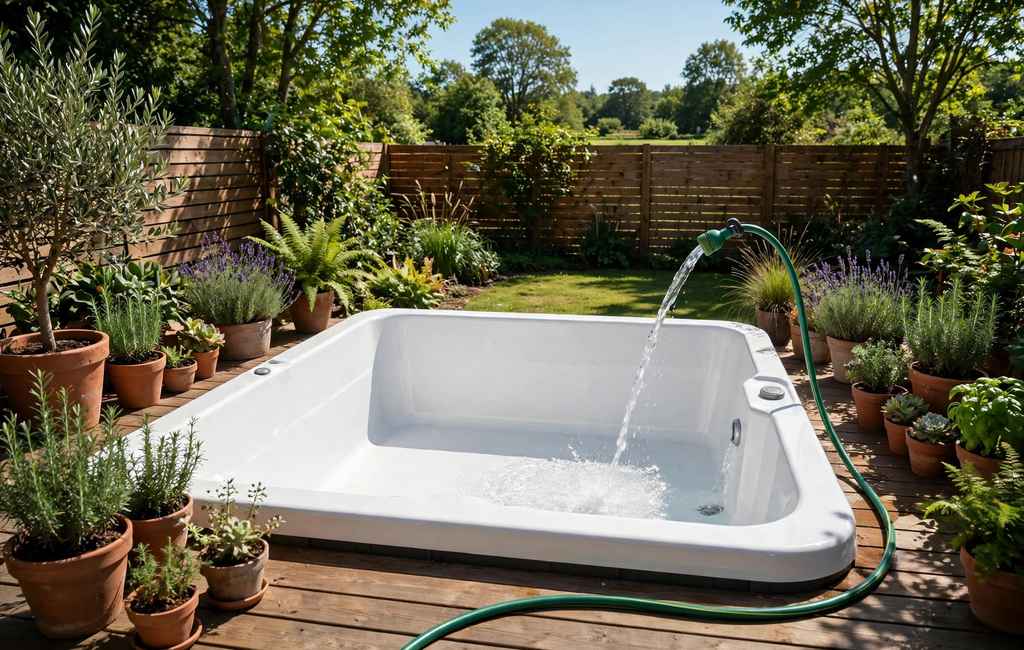
Use a garden hose fitted with a filter attachment if possible. This removes some of the minerals and contaminants present in typical tap water before they even enter your spa. It is a small investment that simplifies chemistry balancing later.
Fill slowly and steadily rather than blasting water in at full pressure. This helps prevent air locks inside the plumbing, which can cause pump problems later. Keep an eye on the water level as it rises toward the manufacturer’s recommended fill line.
Remember that water level rises once people get in. Fill to the line specified in your manual, not higher. Overfilling can cause water to spill out once the tub is in use.
Step Three: Power On And Prime The Pumps
Once filled, follow your manual’s instructions for powering on the system for the first time. Many hot tubs need their pumps primed manually to clear air from the lines. Running jets briefly, then checking for steady water flow, confirms priming worked correctly.
Let the system run for a while before worrying about temperature or chemistry. This circulation period helps distribute any initial debris toward the filter. Check for leaks around fittings and connections during this time as well.
If anything seems off, like unusual noises or weak jet pressure, stop and consult your manual. Addressing a plumbing issue now is far easier than after chemicals are added. Most issues at this stage come down to incomplete priming rather than defects.
Step Four: Balance The Water Chemistry
Water chemistry is where most new owners feel overwhelmed, but the order matters more than the complexity. Follow this general sequence for a proper first fill:
- Total alkalinity: adjust first, since it stabilizes pH changes later.
- pH level: balance next, after alkalinity has settled.
- Calcium hardness: adjust if your water tests low, allowing time before further changes.
- Sanitizer: add chlorine, bromine, or your chosen system next.
- Startup shock: finish with a shock treatment to clear manufacturing residue.
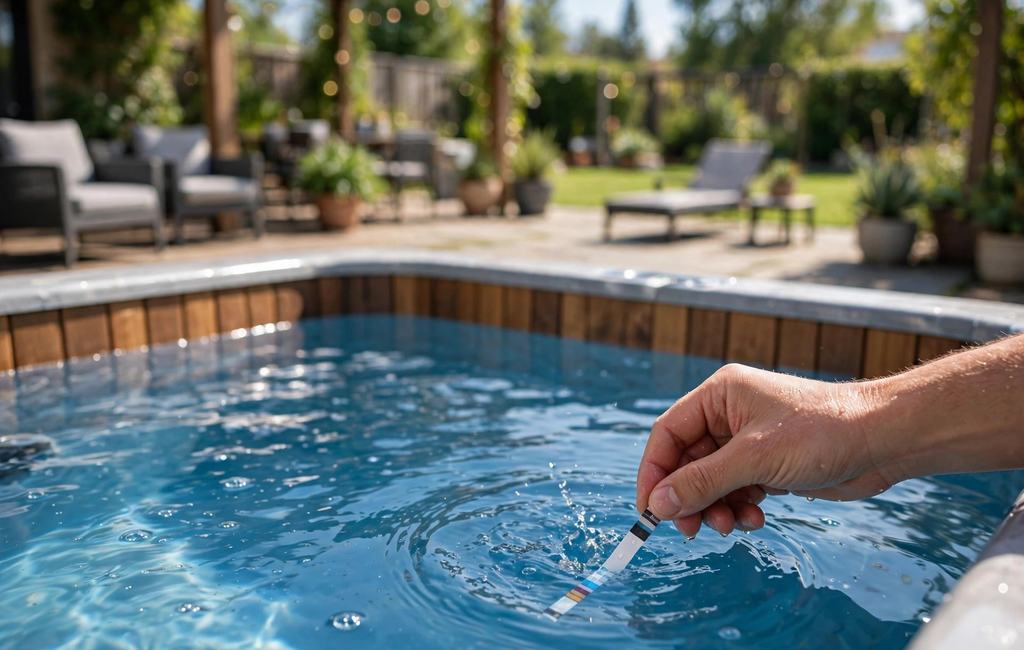
Test your water with strips or a liquid kit at each stage rather than guessing. Adding too much of any chemical at once often causes more problems than it solves. Patience here genuinely pays off over the following weeks.
Allow at least twelve hours between major adjustments when possible, especially after balancing calcium. This gives chemicals time to fully circulate and react. Rushing this process is one of the most common startup mistakes new owners make.
Why Shocking A New Hot Tub Matters
Shocking might sound unnecessary for brand new water, but it genuinely matters. Manufacturing, shipping, and the filling process all introduce small amounts of bacteria and residue. A startup shock dose clears this out before your first soak.
Use a shock product appropriate for your sanitizer system, whether chlorine or non-chlorine based. Follow package instructions for dosing based on your tub’s water volume. Do not close the cover until sanitizer levels read within the safe range and any chemical smell has dissipated.
This step typically adds an extra hour or two of waiting time. It feels like the last hurdle before finally using your new hot tub. Skipping it risks irritation or a less sanitary first experience.
Setting The Right Temperature
Most hot tubs operate comfortably between 100 and 104 degrees Fahrenheit. New owners sometimes crank the temperature up immediately out of excitement. Give the system time to reach its target gradually instead, which is easier on the equipment.
Check your manual for the specific heating rate of your model, since this varies by brand and size. Larger tubs generally take longer to heat than smaller ones. Plan your first soak with this heating time factored in, rather than expecting instant warmth.
Once at temperature, test the water chemistry one final time before getting in. Confirm sanitizer, pH, and alkalinity all sit within recommended ranges. This final check is quick but worth doing every single time before use.
Common First-Time Mistakes To Avoid
A few mistakes show up repeatedly among new hot tub owners. Adding all chemicals at once, rather than in sequence, tops the list. This often leads to chemistry swings that take days to correct.
Skipping the startup shock is another frequent error. New owners assume fresh water is automatically clean, which is not accurate given manufacturing and shipping. Always shock before that very first soak.
Overfilling the tub or ignoring the manual’s specific instructions rounds out the common issues. Every model has its quirks, and the manual exists precisely to address them. Reading it fully before you begin saves real frustration later.
Final Thoughts
Starting up a new hot tub takes patience, but the process is genuinely manageable with the right sequence. Clean, fill, prime, balance chemistry, shock, and heat, each step building on the last. Rushing any single stage tends to create problems down the road.
Once your first soak is ready, take a moment to enjoy it, since you earned it. From here, regular maintenance is far simpler than this initial setup. Keep your manual handy for reference as you settle into a routine. Finally, we recommended the best facials in midtown Manhattan and the best manicure in midtown Manhattan to know more details.
Frequently Asked Questions
How Long Does It Take To Start Up A New Hot Tub
The full process typically takes two to four hours from empty to ready. This includes filling, priming, chemistry balancing, and shocking.
Do I Need To Shock A Brand New Hot Tub
Yes, shocking is necessary even with fresh water. Manufacturing and shipping introduce residue that a startup shock dose clears out.
What Chemicals Go In First When Filling A Hot Tub
Total alkalinity goes in first, followed by pH, then calcium if needed. Sanitizer and a startup shock come last in the sequence.
What Temperature Should A New Hot Tub Be Set To
Most hot tubs run comfortably between 100 and 104 degrees Fahrenheit. Let the system heat up gradually rather than rushing it.
Can I Use Regular Tap Water To Fill A Hot Tub
Yes, but a hose filter attachment helps remove minerals and contaminants beforehand. This makes balancing chemistry afterward considerably easier.

Leave a Reply